
Messenger of Light

If a ray of hope exist for a burdened life,
If you could be the messenger,
A carrier of light,
Dry the tears of some,
Sing songs to delight,
Would you?

If from a high position
You could step into a low one,
And from that humble position
be an entirely broken human,
Would you?

Would you wash dirty, dirt,
Lotion crusty smelly feet,
clothe a mad man,
Defend a convict,
Have conversations with a homeless man?

Could you be a helper,
If the requirement necessary
Was to see the desperate as worthy?
If you’re answer is yes, 
Take you’re light and shine it on others.
Be an ambassador of life
In order that change might occur.

Summary

If you loved me, held me closely,

That would reassure, comfort me.

When I lay down to sleep

I hug my body,

to be held.

It’s not wrong for me to love myself,

To soothe my hurts,

care for my wounds.

And transform, appearing undamaged.

I long for a day of measure

when equality rules,

When interactions are colorless,

carry the mark of love’s signature,

when care transcends self

and extends to others,

When smiles are shared,

a touch, pure in intent seeks to comfort,

to balance harm, halt hatred.

I long for a day when people would hear,

And listen with open hearts,

Without interpreting or summarizing other’s actions.

See all people as God’s creation,

No matter race or station,

Empower each soul through love

Help everyone shine in God’s image.

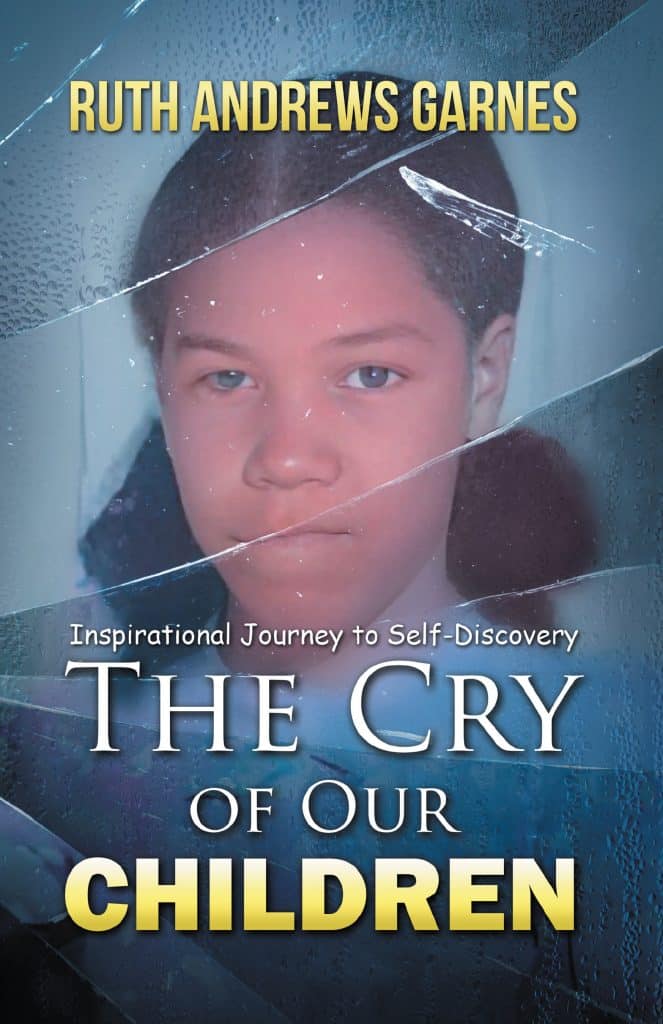
Introducing THE CRY OF OUR CHILDREN: POEMS BY RUTH ANDREWS GARNES

As I reminisce, it’s as though a solitary conversation ignited my life’s journey, with its twists and turns leading me to this precise moment. This journey is enriched with poetry for healing and stories of resilience, growth, and recovery.

In the late eighties I worked as a nurse at Bellevue Hospital Center. One day, when I was the triage nurse, a rather handsome-looking fellow came in. I still remember that he was in great physical shape and did not appear to be someone who needed attention in the emergency room. Being a nurse, facing death was not a new experience. However, the tragedy of it never gets old. As this handsome fellow conversed with me, I learned that he had just been released from prison. While he was in prison, he was diagnosed with the AIDS virus.

I think I saw the fear of death in his desperate eyes. Perhaps it was that fear that brought him straight to the emergency room upon his release from prison. I put down my pen. I tried my utmost best to gather myself and to convey some encouraging words to diffuse the heaviness surrounding us. I felt it necessary to lift him up out of his despair and to give him a message of hope. With that, I told him that he could make something of his life as long as he was alive and not to let this malady define his entire life. His response immediately halted the conversation, and he withdrew from it; his final remark shook me. He said that it was easy for me to sit on my chair and say all those things.

The journey that led me to that chair was fraught with many pains and silent struggles, yet I genuinely believed everything I expressed to him. I hadn’t fully processed everything that had happened in my life, which might explain why I stayed optimistic. However, now that I have thoroughly reflected on my life’s journey and mourned certain parts of it, I find myself back to the same conclusion: I would repeat the same words to him today that I did thirty years ago. 

My poetry book, filled with inspirational poetry, captures my life experiences, contemplations, sorrows, and realizations. Within the pages of “The Cry of Our Children,” the stories of resilience unfold, leading to the ultimate conclusion that love is the answer, urging us to demonstrate greater concern and compassion towards one another.